
Lumber
Processed wood used for construction, finishing, and industrial purposes.

Stephen Ondich · CC BY-SA 4.0
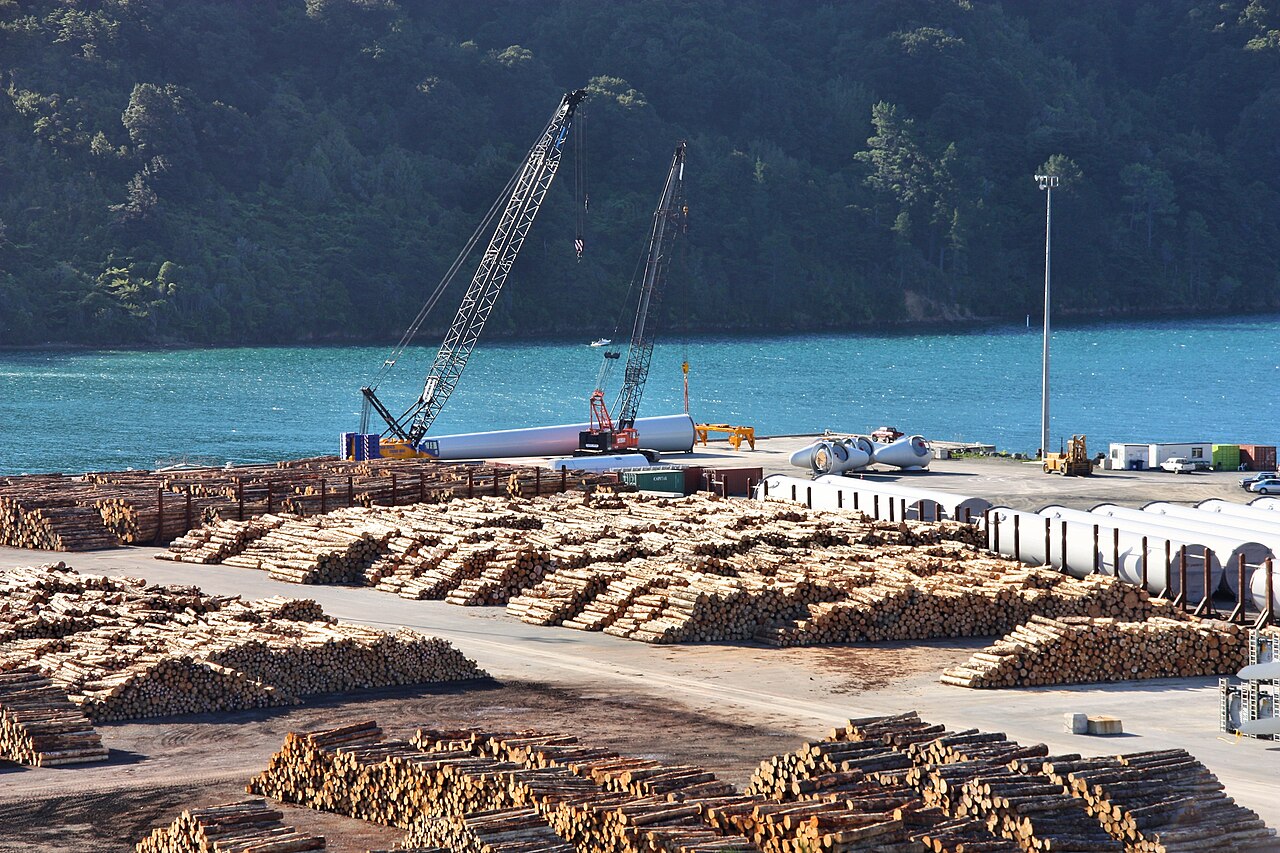
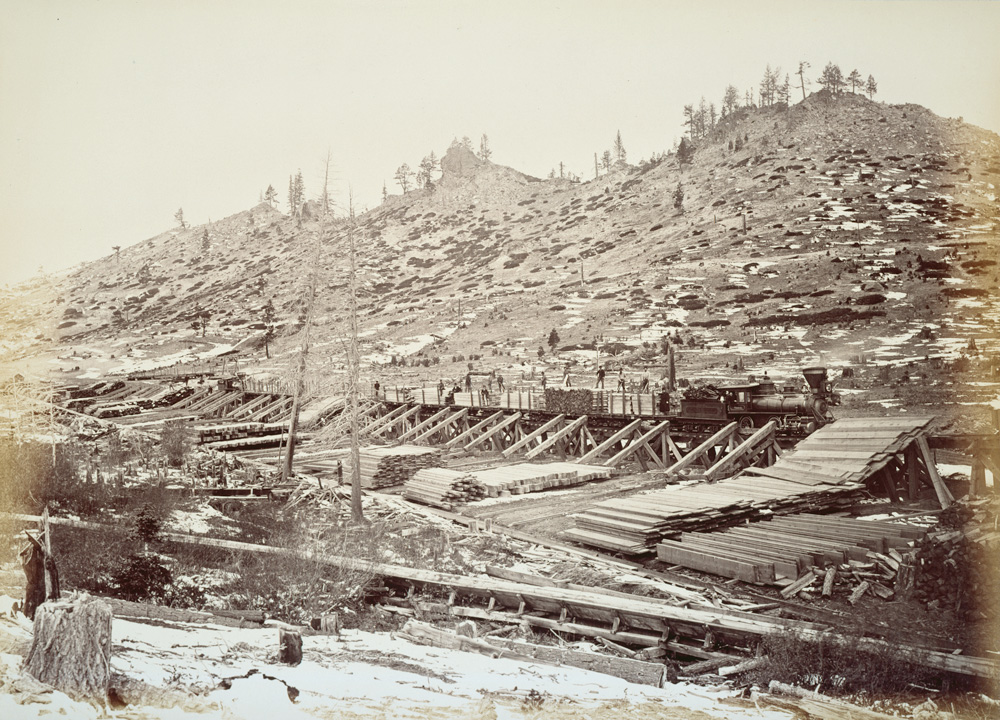
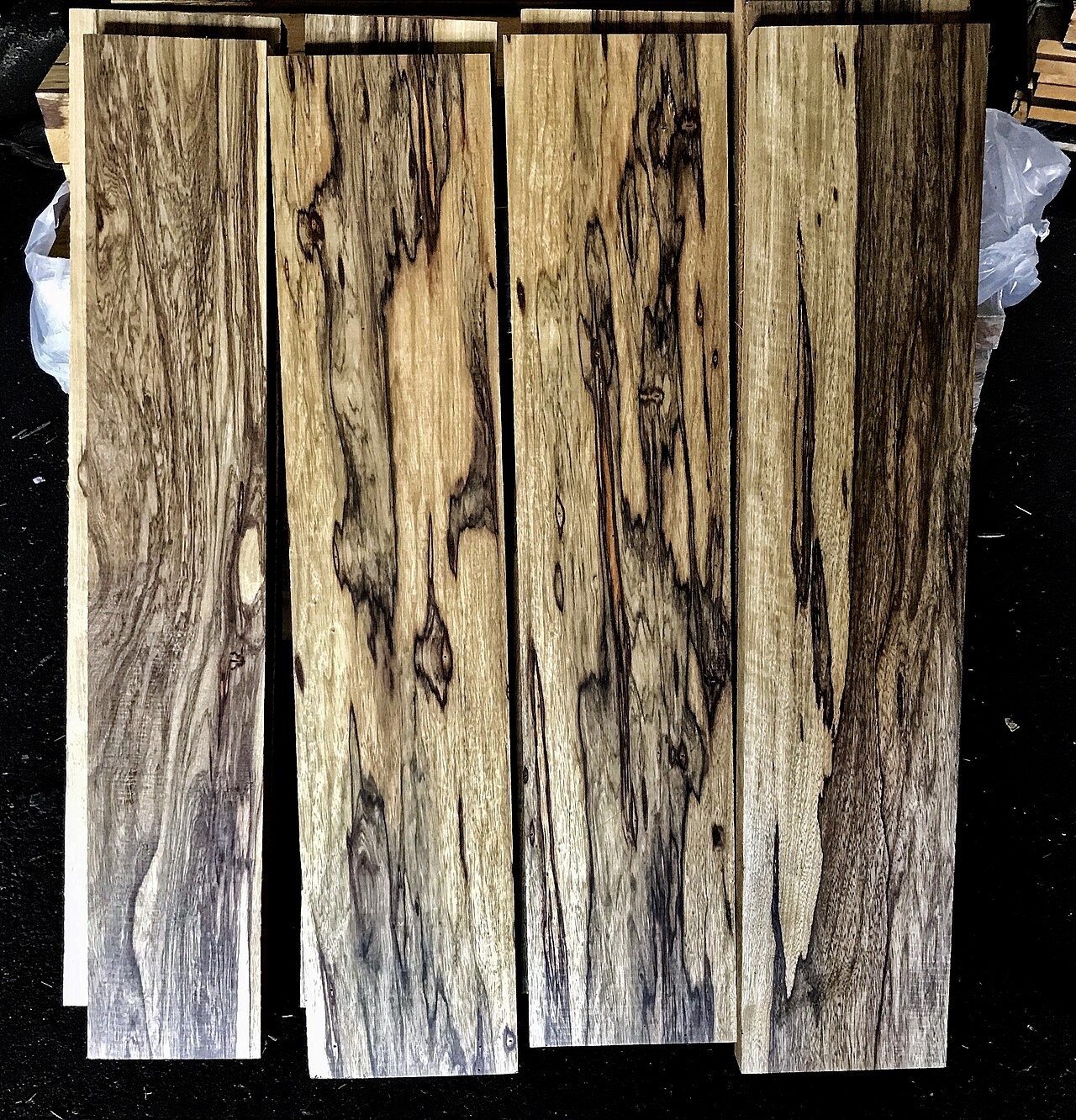
Lumber, also called timber or fine wood in the United Kingdom, Australia, and New Zealand, is wood that has been processed into uniform and useful sizes, including beams and planks or boards. It is mainly used for construction framing, finishing such as floors and wall panels, and has many uses beyond home building. In the United States and Canada, the term timber can refer to unprocessed wood fiber, such as cut logs or standing trees, but also to large-dimension milled beams (as in timber framing); milled boards are called lumber. In Britain and some other Commonwealth nations, timber is used in both senses.
- field
- Construction material, wood processing
- known_for
- Primary material for building framing and finishing; standardized dimensional lumber
- common_species
- Softwood (pine, fir, spruce, cedar, hemlock) and hardwood
- typical_max_length
- 24 feet (7.32 m) for North American softwoods
- standard_sizes
- 2×4, 2×6, 4×4, and others; nominal dimensions larger than actual finished dimensions
Lore & Background
The definition of the word lumber as sawn planks of wood originated in 16th-century England. Settlers cleared forests and likely shipped timber to the mainland, though the export of processed sawn planks at that early date is speculative and not widely established. Logs are converted into lumber by sawing, hewing, or splitting. Sawing with a rip saw is the most common method, allowing use of lower-quality logs. Types of sawing include plain sawn, quarter sawn, and rift sawn. Dimensional lumber is cut to standardized width and depth, with common sizes including 2×4, 2×6, and 4×4. In Canada and the United States, standard lengths range from 6 to 24 feet. Pre-cut stud lengths are available for 8-, 9-, and 10-foot ceiling heights. Lumber's nominal dimensions are larger than actual finished dimensions. Historically, a green rough 2×4 measured 2 by 4 inches; after drying and planing, it became smaller. Today, a finished 2×4 is minimally 1½ by 3½ inches. Re-manufactured lumber results from secondary processing, such as re-sawing a 2×4 into two 2×2s. Plastic lumber, produced from recycled or new plastic, may include fiberglass for enhanced strength and fire resistance.
Reader's Guide
Lumber is a fundamental material in construction and woodworking, with a history shaped by technological innovation and standardization. The term lumber itself originated in 17th-century North America, reflecting the region's central role in the industry. Dimensional lumber, cut to standardized sizes like the 2×4, became the backbone of modern building methods such as balloon-frame and platform-frame housing. Lumber is predominantly softwood (80% of supply), with hardwoods used for high-grade flooring and furniture. Re-manufactured lumber and plastic lumber represent ongoing adaptations to industrial and environmental demands. The distinction in terminology between lumber and timber across regions (North America vs. Britain and Commonwealth nations) underscores cultural and linguistic differences in the trade.
Did You Know?
- In the United States and Canada, milled boards are called lumber, while timber can describe standing or felled trees as well as large-dimension milled beams; in Britain, timber is used for both.
- Plastic lumber can have a class 1 flame spread rating of 25 or less when tested per ASTM E 84, burning more slowly than almost all treated wood lumber.
From Wood to Composite: A Shifting Standard
For decades, traditional timber held an unchallenged position as the go-to material for building outdoor decks. Pressure-treated pine, redwood, cedar, and mahogany dominated the landscape well into the early 1990s. That era came to a close when a new category of building material entered the market: composite lumber. By blending wood fiber with plastic and a binding agent, manufacturers created a denser, stronger, and heavier substance that mimicked the appearance and workability of natural wood while offering superior water resistance and dramatically reduced upkeep. As homeowners increasingly embraced outdoor living spaces as central features of their properties, the appeal of a decking material that did not demand annual staining or sanding proved difficult to resist. Although the majority of decks still rely on conventional hardwoods and treated softwoods, composite products have steadily gained ground, transforming from a niche alternative into a mainstream option for builders and DIY enthusiasts alike.
Built for Endurance: Performance and Practicality
Working with composite lumber closely mirrors the experience of handling traditional timber, yet the material brings several meaningful upgrades to the table. It is less prone to splitting and delamination, and certain formulations are engineered to reduce overall weight for easier handling on site. Perhaps most notably, composite boards resist staining, scratching, and mold growth far better than natural wood, lending them a longer functional lifespan. Because the product arrives from the factory as a fully finished surface, there is no requirement to sand, stain, or paint before installation. While the upfront price tag typically exceeds that of standard or pressure-treated lumber, the combination of extended service life and minimal ongoing maintenance can make composites more economical over the full ownership period. Most manufacturers back their products with warranties spanning anywhere from several years to the entire expected life of the deck, covering fade resistance, structural integrity, and stain resistance. Additionally, many composite boards incorporate recycled plastics and waste wood, turning discarded materials into a functional building product.
The Cost of Convenience: Limitations and Trade-offs
No building material is without compromise, and composite lumber is no exception. The most frequently cited drawback is cost: while prices have gradually declined since the product first hit the market, the initial investment for a composite deck still generally exceeds what a homeowner would spend on conventional or treated lumber. Beyond the price question, the material is not invulnerable. Although composites are specifically formulated to resist fading, scratching, and staining, no decking product is truly immune to the elements, and visible signs of wear will inevitably accumulate over time. Aesthetic preferences also divide opinion. Manufacturers mold a wood-grain or brush-stroke pattern into the surface, yet many consumers and contractors find the resulting plastic-like sheen unappealing, preferring the organic texture of genuine timber. This perception of artificiality remains one of the most persistent criticisms, and it is a factor that can sway a buyer back toward traditional wood despite the practical advantages of the composite alternative.
Sustainability Questions and the Capped Composite Evolution
The environmental credentials of composite decking remain a subject of active debate. Proponents of traditional wood argue that timber is a more sustainable raw material with a smaller manufacturing carbon footprint. Critics of composites point out that the dust generated when sawing these boards during construction does not biodegrade, and that spent deck boards will persist in landfills rather than decompose naturally. Some manufacturers counter by offering buy-back programs that reintroduce old composite material into the production of new boards. On the innovation front, capped composite decking represents a significant refinement. A thin PVC-like veneer, roughly one-sixteenth of an inch thick, is co-extruded onto the board to deliver enhanced fade, stain, and scratch protection. This added manufacturing step increases cost, and the boards still carry a synthetic feel that some reject. Standard dimensions run 5.5 by 3/4 inch in lengths of 12, 16, or 20 feet, available in grooved or solid-sided profiles. Many producers leave one face uncapped to allow natural expansion and contraction, while a minority seal all four sides for a fully reversible board with distinct grain patterns on each face.
Gallery
More in Manufacturing And Materials 1-24
Elsewhere in the Manufacturing And Materials universe
Spotted an error? Know more?
This is a living reference — every entry is fact-audited, and reader corrections feed straight into our audit queue. Suggest an edit · See this site's audit record