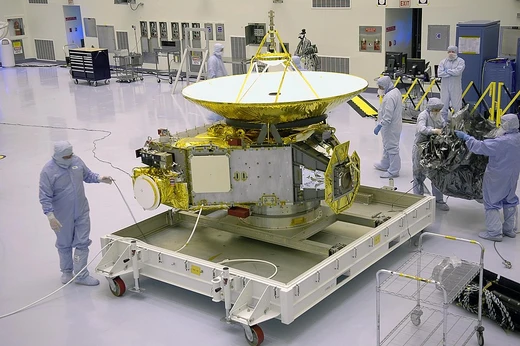
Metal fabrication
Metal fabrication creates structures by cutting, bending, and assembling.

Dosseman · CC BY-SA 4.0
Metal fabrication is the creation of metal structures through cutting, bending, and assembling processes. It is a value-added process that produces machines, parts, and structures from raw materials such as plate metal, structural steel, and tube stock. Fabrication shops typically bid on jobs based on engineering drawings and, if awarded the contract, build the product using a combination of human labor and automation.
- field
- Metalworking
- known_for
- Creation of metal structures via cutting, bending, and assembling
- processes
- Cutting, bending, assembling, welding, machining
- common_materials
- Plate metal, structural steel, tube stock, welding wire
- typical_products
- Weldments, structural steel assemblies, sheet metal parts
Lore & Background
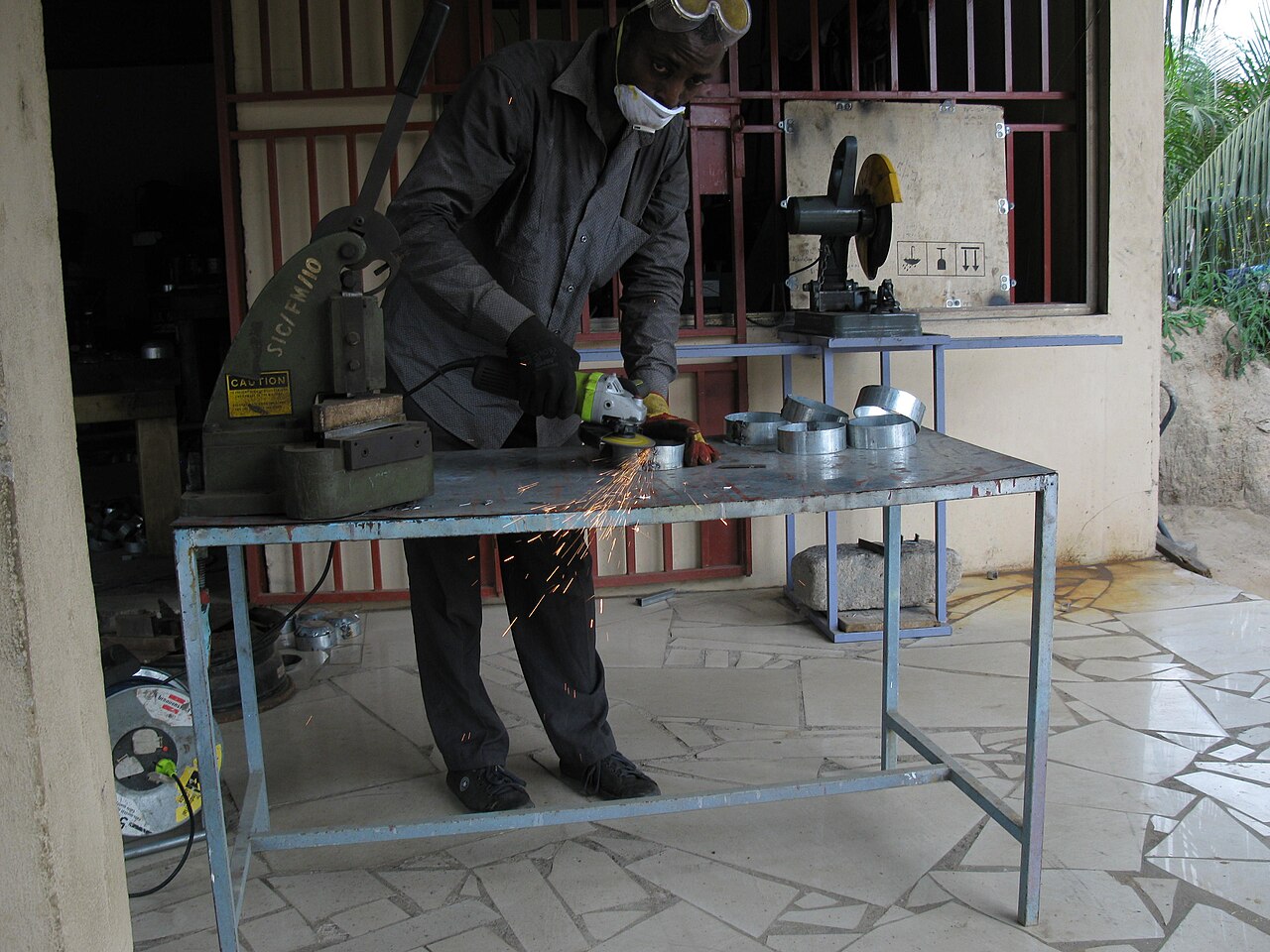
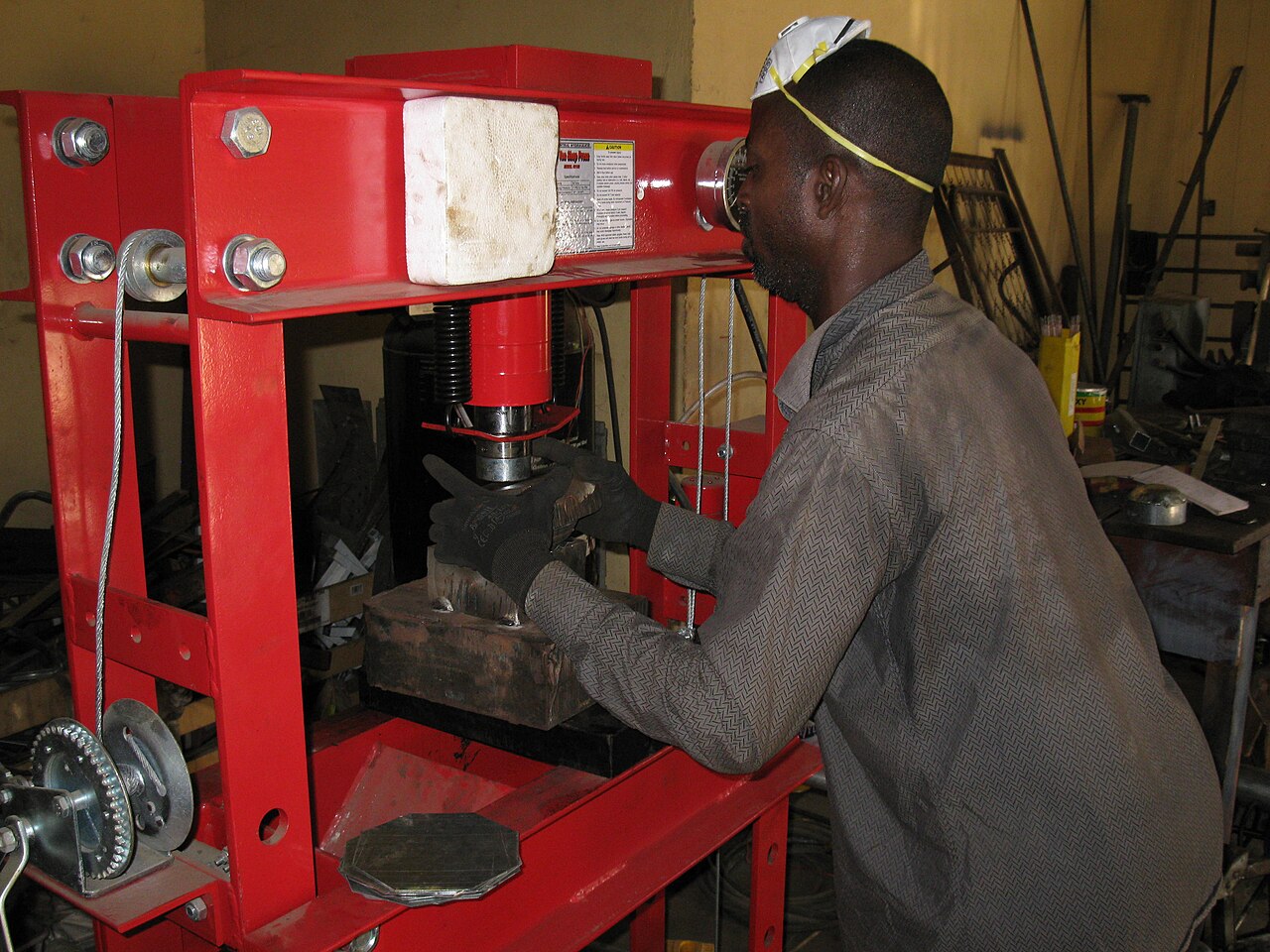
Metal fabrication encompasses cutting, bending, and assembling processes. Cutting is performed by sawing, shearing, chiselling, torching with handheld torches (such as oxy-fuel or plasma torches), or via CNC cutters using laser, mill bits, torch, or water jet. Bending is done by hammering or using press brakes, tube benders, and similar tools; modern fabricators use press brakes to coin or air-bend metal sheet. Assembling joins pieces through welding, adhesives, riveting, threaded fasteners, or crimped seams.
Reader's Guide
Metal fabrication is significant as a foundational manufacturing process that overlaps with specialties such as sheet metal fabrication, machine shops, blacksmithing, welding, boilermaking, millwrighting, and ironworking. Fabrication shops concentrate on metal preparation and assembly, while machine shops focus on machining parts on machine tools. The end products of other metalworking processes—machining, stamping, forging, and casting—may be similar in shape and function but are not classified as fabrication. Fabrication adds value by transforming raw materials into finished structures and components used across industries. The legacy of metal fabrication lies in its role as a core method for producing durable metal goods, from structural steel frameworks to precision weldments, relying on both skilled labor and automated machinery.
Did You Know?
- Fabrication shops typically bid on jobs based on engineering drawings and build the product if awarded the contract.
- Cutting methods include sawing, shearing, chiselling, torching, and CNC cutting with laser, mill bits, torch, or water jet.
- Welding is the main focus of steel fabrication; formed and machined parts are assembled and tack-welded in place.
- Straightening of warped steel weldments is done with an oxyacetylene torch, applying heat in a slow, linear sweep.
The Fabrication Workflow
Metal fabrication is fundamentally about transforming raw metal into functional structures through a defined sequence of cutting, bending, and assembling operations. A typical project begins when a fabrication shop receives engineering drawings and submits a bid on the contract. Once the job is awarded, the shop undertakes a value-added process that converts plate metal, checker plate, tube stock, structural steel, and other raw materials into machines, individual parts, and fully assembled structures. The workflow is not a single step but a layered progression: material is first cut using shears, band saws, torches, or CNC machines; then bent via press brakes, tube benders, or manual and powered hammering; and finally joined through welding, riveting, threaded fasteners, adhesives, or crimped seams. Both human labor and automation play significant roles throughout the process. What distinguishes fabrication from other metalworking disciplines such as forging, casting, or metal stamping is this specific combination of metal preparation and assembly, even though the end products of those other processes may look similar in shape and function.
Welding as the Heart of Steel Fabrication
Welding sits at the center of steel fabrication, serving as the primary method for joining formed and machined components into complete assemblies. The process follows a disciplined sequence: parts are positioned and tack-welded into place, then rechecked against engineering drawings for accuracy before the welder completes the final work. When multiple identical weldments are required, a fixture holds parts in precise location to ensure consistency. The welder may follow detailed engineering drawings for precise weld specifications or rely on personal experience and judgment when those details are not provided. One of the most challenging aspects of the trade is managing heat-induced warping in the finished weldment. Fabricators combat this through staggered welding sequences, robust fixtures, redesigning pieces to minimize total weld volume, or even burying the weldment in sand during the cooling phase. When warpage does occur, a highly skilled welder uses an oxyacetylene torch to apply heat in a slow, linear sweep across the steel, causing it to contract in the direction of the sweep as it cools, gradually removing significant warpage. In some cases, weldments are annealed in a low-temperature oven to relieve residual stresses, a step particularly important for critical components such as engine blocks, which may then be line-bored after heat treatment.
Overlapping Trades and Specialties
Metal fabrication does not exist in isolation; it overlaps significantly with several other metalworking trades. Sheet metal fabrication shops and machine shops share capabilities, though fab shops tend to concentrate on metal preparation and assembly while machine shops focus on precision machining of individual parts using lathes, mills, drills, and other portable tools. Blacksmithing has always involved fabrication, even if that specific term was not historically applied. Boilermakers originally specialized in building boilers but now apply their skills across a broader range of fabrication work. Millwrights, who once set up grain mills and saw mills, have expanded into a wide variety of fabrication tasks. Ironworkers, also called steel erectors, frequently work with prefabricated segments produced in fab shops and delivered to construction sites for erection. Beyond these trades, many fabrication shops offer additional specialty processes such as casting, powder coating, powder metallurgy, and CNC operations, making them versatile hubs of metalworking capability that serve industries from aerospace to civil construction.
Cutting Technology and Forming
The cutting stage of fabrication has evolved from manual methods to highly automated systems. Traditional approaches include shearing, the most common method, along with band saws fitted with hardened blades, abrasive chop saws, and handheld oxy-fuel or plasma torches. Modern shops rely heavily on CNC-controlled cutting: burn tables powered by natural gas, plasma and laser cutting tables, and water jet cutters all program the removal of parts from plate steel loaded on a grid support table. In structural steel fabrication, robots move plasma or laser cutting heads in three dimensions around the material. Higher-end burn tables even incorporate CNC punch capability using a carousel of punches and taps. Forming, the next major stage, converts flat sheet into three-dimensional shapes by applying force without adding or removing material. Press brakes perform coin or air-bending, while CNC-controlled backgauges with hard stops position parts for precise bend lines. Because most metallic materials are sufficiently ductile to undergo permanent deformation without cracking, they lend themselves well to these techniques, enabling repeatable forms for industries ranging from jewelry and aerospace to automotive and civil construction.
Gallery

More in Manufacturing And Materials 1-24
Elsewhere in the Manufacturing And Materials universe
Spotted an error? Know more?
This is a living reference — every entry is fact-audited, and reader corrections feed straight into our audit queue. Suggest an edit · See this site's audit record