
Precast concrete
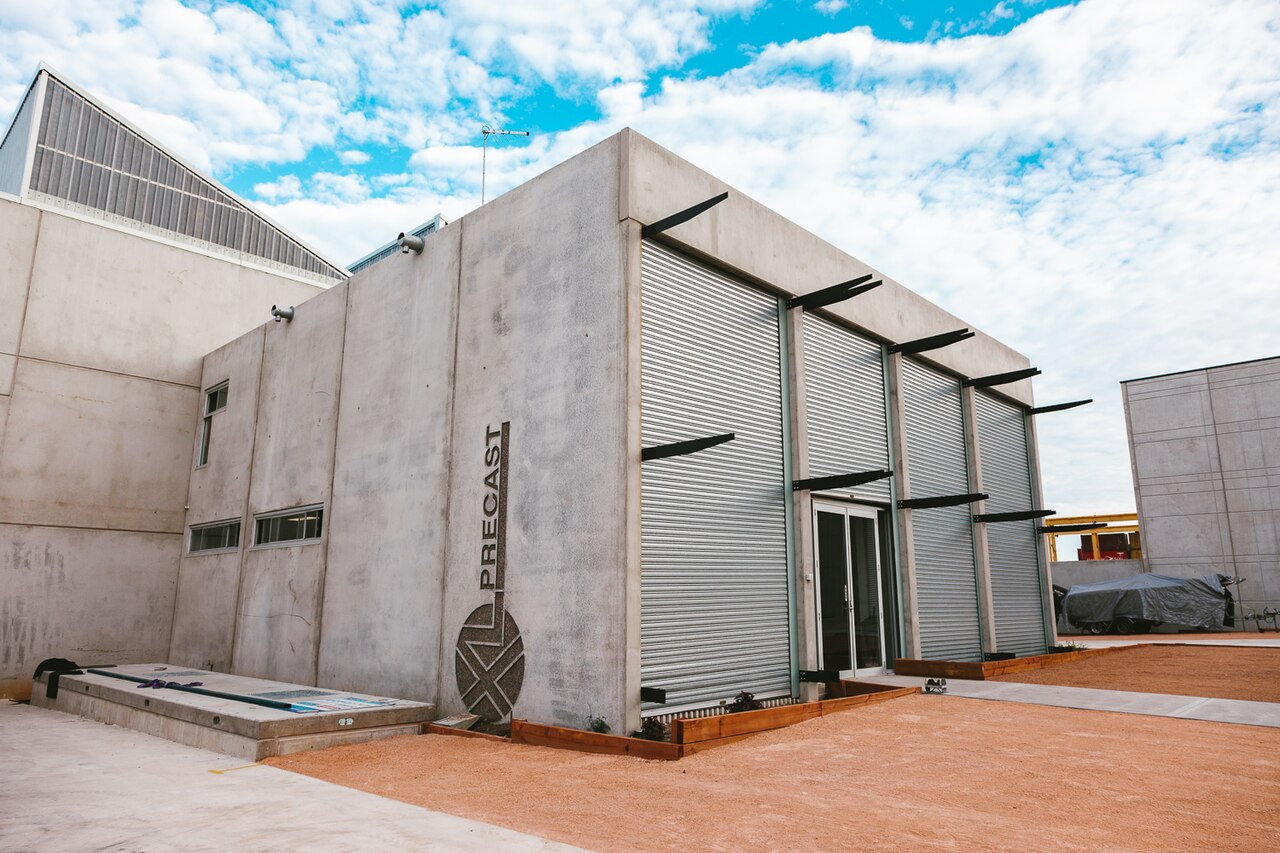
Concrete cast in reusable molds under controlled conditions.

Asurnipal · CC BY-SA 4.0
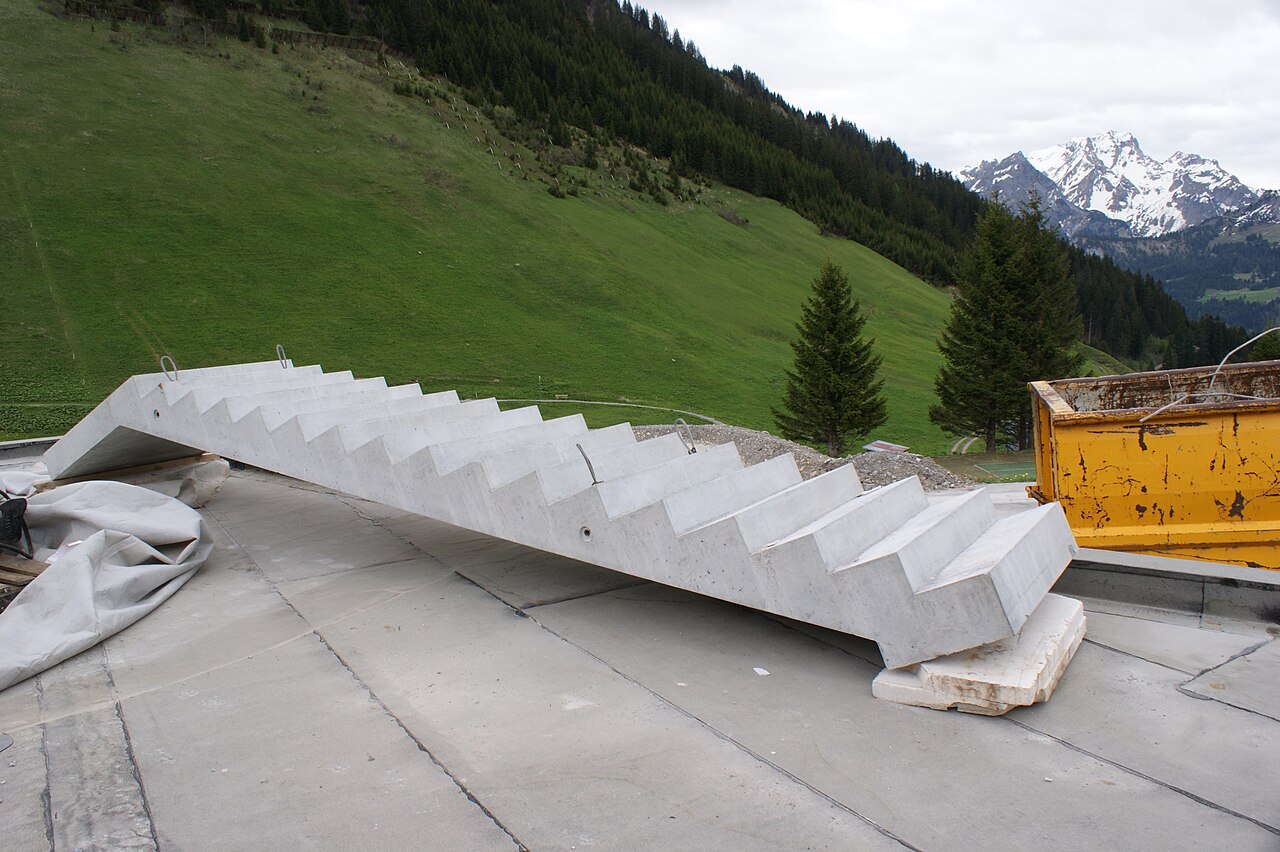
Precast concrete is a construction product produced by casting concrete in a reusable mold or 'form' which is then cured in a controlled environment, transported to the construction site and maneuvered into place. It is employed in both interior and exterior applications, from highway, bridge, and high-rise projects to parking structures, schools, warehouses, and industrial buildings. Modern uses for precast technology include a variety of architectural and structural applications, including individual parts or even entire building systems.
- field
- Construction material and method
- known_for
- Producing concrete elements in a controlled environment for use in buildings, bridges, and infrastructure
- key_innovation
- Reusable molds and prestressing
- early_modern_example
- Precast panelled buildings pioneered in Liverpool, England, in 1905 by city engineer John Alexander Brodie
- major_associations
- Precast/Prestressed Concrete Institute (PCI) and National Precast Concrete Association (NPCA)
Lore & Background
Ancient Roman builders made use of concrete and poured the material into moulds to build their complex network of aqueducts, culverts, and tunnels. In the modern world, precast panelled buildings were pioneered in Liverpool, England, in 1905, invented by city engineer John Alexander Brodie. The idea was not taken up extensively in Britain but was adopted all over the world, particularly in Central and Eastern Europe as well as in the Million Programme in Scandinavia. Designed by the St.
Reader's Guide
Precast concrete has evolved as two sub-industries in the US: the precast concrete structures industry, represented primarily by the Precast/Prestressed Concrete Institute (PCI), focusing on prestressed concrete elements and other precast concrete elements used in above-ground structures such as buildings, parking structures, and bridges; and the precast concrete products industry, producing utility, underground, and other non-prestressed products, represented primarily by the National Precast Concrete Association (NPCA). Precast concrete offers many potential advantages over onsite casting, including production on ground level for safety, greater control over material quality and workmanship, and reusable forms that can be used hundreds to thousands of times, often making it cheaper than onsite casting per unit of formwork. Beyond cladding panels and structural elements, entire buildings can be assembled from precast concrete, enabling fast completion with minimal labor. For example, the Jim Bridger Building in Williston, North Dakota, was precast in Minnesota with utilities preinstalled, transported over 800 miles, and assembled by three workers. Recent innovations include the use of lightweight expanded polystyrene foam as cores of precast wall panels, saving weight and increasing thermal insulation. Precast concrete products are used in agriculture, building and site amenities, retaining walls, sanitary and stormwater management, and utility structures. Reinforcing concrete with steel rebar improves strength and durability, with carbon steel being the most common rebar material, though stainless steel, galvanized steel, and epoxy coatings can prevent corrosion.
Did You Know?
- Precast concrete molds can be made of timber, steel, plastic, rubber, fiberglass, or other synthetic materials, each giving a unique finish.
- The Jim Bridger Building in Williston, North Dakota, was precast in Minnesota with air, electrical, water, and fiber utilities preinstalled, then transported over 800 miles and assembled by three workers.
- Precast concrete production can be performed on ground level, which maximizes safety in its casting.
- Expanded polystyrene foam cores are now used in precast concrete panels for structural use, making them lighter and serving as thermal insulation.
The Controlled Plant Advantage
Precast concrete is manufactured by pouring the mix into a reusable mold, allowing it to cure under carefully monitored conditions before being hauled to the job site and lifted into position. This factory-based approach stands in sharp contrast to cast-in-place concrete, which is mixed, poured, and cured entirely at the construction site. Because production takes place on ground level inside a dedicated precast plant, workers benefit from significantly improved safety compared to elevated or confined on-site casting. The controlled environment also grants tighter oversight of material quality and workmanship. Reusable forms—fabricated from timber, steel, plastic, rubber, fiberglass, or other synthetic materials—can endure hundreds or even thousands of casting cycles before replacement, which often drives down the per-unit formwork cost relative to building site-specific forms. Each mold material imparts its own distinctive surface character, and the four principal wall panel types (sandwich, plastered sandwich, inner layer, and cladding) can be finished to mimic horizontal boards or ashlar stone. Pigments blended into the mix, along with aggregate size and proportion, further shape the color, texture, and visual depth of the final product.
From Roman Aqueducts to Modern Estates
The practice of shaping concrete within molds stretches back to ancient Rome, where builders cast the material into forms to construct their intricate networks of aqueducts, culverts, and tunnels. The modern era of precast construction, however, traces its roots to 1905 in Liverpool, England, where city engineer John Alexander Brodie introduced the first precast panelled buildings. A pair of tram stables at Walton followed the next year, yet the technique failed to gain widespread traction in Britain. It found far greater enthusiasm across Central and Eastern Europe and within the Scandinavian Million Programme. Designed by the St. Today the American industry is split between the PCI, which governs prestressed structural elements, and the NPCA, which covers utility and underground products.
Steel and Stone: The Reinforcement Partnership
Concrete excels at resisting compression but is inherently weak in tension and shear, making it prone to cracking under sustained loads. Steel reinforcement fills precisely that gap. When embedded within the concrete matrix, steel members supply the tensile and shear capacity the cementitious material lacks, and because steel and concrete expand and contract in a broadly similar manner under temperature and moisture changes, the two materials move together rather than against each other, reducing the risk of differential cracking. Ribbed steel bars, commonly called rebar, represent the most widely used reinforcement. The ribbing creates a mechanical key that locks the bar into the surrounding concrete as it cures, and the bars can be bent or assembled to conform to virtually any structural geometry. Carbon steel dominates the market, though stainless steel, galvanized coatings, and epoxy wraps are employed where corrosion resistance is critical. In prestressed applications, these same steel elements are tensioned before the concrete hardens, producing beams, bridge girders, highway segments, and parking-structure decks that carry far greater loads than plain concrete could manage. The result is a composite material whose strength and durability far exceed either component used alone.
From Wall Panels to Whole Buildings
Precast concrete now spans an extraordinary range of applications, from highway and bridge components to high-rise structural frames, parking decks, K-12 schools, warehouses, and industrial facilities. Architectural panels clad entire building facades or stand as free-standing walls for landscaping, soundproofing, and security, while utility products handle stormwater drainage, water and sewage piping, and tunnel linings. A notable recent development is the use of lightweight expanded polystyrene foam as the core of precast wall panels, which simultaneously reduces overall weight and boosts thermal insulation. At the other end of the spectrum, precast stone—distinguished by its finer aggregate—produces a surface that closely resembles natural cut stone. Perhaps the most striking demonstration of the technology's reach is the Jim Bridger Building in Williston, North Dakota. Fabricated almost entirely in Minnesota with air, electrical, water, and fiber-optic utilities already embedded in the panels, the structure was hauled more than 800 miles to the Bakken oilfields, where just three workers assembled over 40,000 square feet of commercial shops and offices in a matter of days.
Gallery

More in Manufacturing And Materials 1-24
Elsewhere in the Manufacturing And Materials universe
Spotted an error? Know more?
This is a living reference — every entry is fact-audited, and reader corrections feed straight into our audit queue. Suggest an edit · See this site's audit record